After some intense simulation and modification this is the table that we are going to be using for the version 0.1 rules. They work OK, we had units going from green (Q3) over average (Q4), hardened (Q5) and elite (Q6) with leaders (Q4 to 6) with modifiers ranging from +1 (very poor commander) up to -2 (excellent commander). Although luck still plays a role, the general feel was just right, and it will probably be even more so when more units are in play and luck evens out.
The pinned | retreat | rout | surrender system seems to work to satisfaction. The baby dice are a simple way of keeping track of suppression per team. One thing still to look into is how leaders react to suppression.
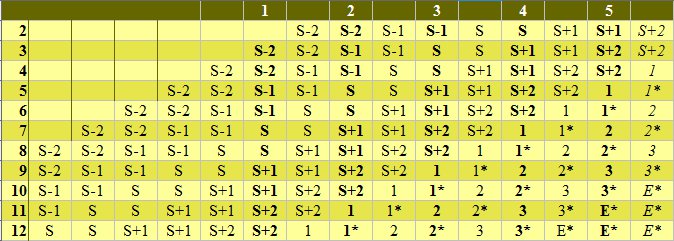
S-n / S+n: defender performs a suppression roll with a -n / +n modifier
n: defender automatically suffers n point(s) of suppression
E: defender is eliminated
*: doubles creates fire in target hex (woods, buildings)
Modifiers:
Attacker leader modifier:
Shift the number of columns to the right for a negative modifier (better leader)
Shift the number of columns to the left for a positive modifier (worse leader)
Attacker has the high ground: shift one column to the right
Target is in:
Soft cover, Tank rider, Soft Top vehicle: shift one column to the left
Bocage, ditch, entrenchment: shift two columns to the left
Wooden building, wooden wall: shift two buildings to the left
Armored Vehicle, Gun shield: shift two buildings to the left
Stone building, stone wall: shift three buildings to the left
Attacker Pinned: shift one column to the left
Attacker Retreating (defensive fire only): shift two columns to the left
Suppression roll:
The defender rolls one die, adds the indicated modifier and the leader modifier to the roll, and compares the result with the unit quality. If the roll result is equal to or lower than the quality the target unit does not incur suppression. If the roll result is higher than the unit quality, the unit suffers one point of suppression. The unit's suppression is indicated with a baby D6.
Unit suffers suppression:
This result omits the suppression roll and the target unit automatically incurs the indicated number of suppression points. Effect are identical to suppression incurred via suppression rolls.
Suppression effects:
When a number of suppression points equal to half the quality (rounded up) is reached, the unit must check quality. The roll is modified by the difference between quality and suppression. If this fails the unit is pinned, it can no longer move towards the enemy, but can still fire normally. If the check is successful, nothing happens.
When a number of suppression points equal to the quality is reached, the unit must check quality. The roll is modified by the difference between quality and suppression. If this fails the unit retreats: it must move away from the enemy, and can only perform defensive fire. If the check is successful, the unit becomes / remains pinned.
A unit that is retreating and that incurs additional suppression points, must check quality, again with the difference modifier, and rout when the roll fails.
When retreating is impossible because of enemy troops, the unit remains pinned instead.
When routing is impossible because of enemy troops, the unit surrenders or is eliminated if unit type does not allow surrender.
When a number of suppression points equal to the quality is reached, the unit must check quality. The roll is modified by the difference between quality and suppression. If this fails the unit retreats: it must move away from the enemy, and can only perform defensive fire. If the check is successful, the unit becomes / remains pinned.
A unit that is retreating and that incurs additional suppression points, must check quality, again with the difference modifier, and rout when the roll fails.
When retreating is impossible because of enemy troops, the unit remains pinned instead.
When routing is impossible because of enemy troops, the unit surrenders or is eliminated if unit type does not allow surrender.
Elimination:
The targeted team is eliminated. All units that are adjacent to the eliminated unit must perform a suppression roll.


